

Introduction to Coconut Coir Materials
Natural fibers are becoming increasingly popular across various industries as manufacturers and consumers explore alternatives to conventional synthetic materials. Coconut coir, extracted from the outer husk of coconuts, is one such material valued for its durability, distinctive texture, and versatility. It is used in applications ranging from furniture manufacturing and home accessories to gardening, landscaping, and outdoor shading.
Coconut-producing countries generate substantial quantities of husks that can be processed into useful materials. Through appropriate processing, these agricultural resources can become valuable raw materials for manufacturers, distributors, and businesses serving international markets.
Two interesting applications are coconut coir upholstery and coconut fiber shade sails. Although both use coconut-derived fibers, they serve different purposes and require different material characteristics. Understanding their properties, applications, and limitations helps buyers select products that match their intended use.
Understanding Coconut Coir Upholstery
Coconut coir upholstery refers to the use of coconut fibers in upholstery-related applications, particularly as padding, cushioning, or supporting material in furniture. Coir fibers have a naturally coarse structure that can provide firmness and resilience when processed and incorporated into suitable products.
In furniture manufacturing, coir may be used in mattresses, seat cushions, sofa padding, and other products requiring a supportive internal layer. Depending on the manufacturing process, the fibers can be combined with latex or other suitable binding materials to create cushioning structures with different levels of firmness.
One advantage of coir is its natural texture and fibrous composition. Unlike some conventional foam materials, coir-based cushioning can provide a relatively firm structure and may allow airflow through the fiber network. These characteristics can be useful in specific furniture designs, particularly when the material is engineered for its intended application.
However, the performance of coir upholstery depends on fiber quality, density, binding methods, moisture management, and the design of the finished product. Coconut fiber is not automatically suitable for direct contact with every upholstery surface. Manufacturers must determine whether the material provides the necessary comfort, durability, and support.
Benefits of Coconut Fiber in Furniture Manufacturing
Coconut fiber offers several characteristics that make it attractive for selected furniture applications. Its natural strength and coarse texture can provide a supportive structure when the fibers are processed appropriately.
One potential benefit is resilience. Properly manufactured coir padding can retain a degree of structural firmness under repeated use. This makes it useful in certain mattresses, seating products, and cushioning systems where a stable internal layer is desirable.
Airflow is another consideration. The spaces between fibers can allow air to move through the material, depending on its density and construction. This characteristic may support ventilation within a cushioning system, although the performance of the complete product also depends on its covers, adhesives, and other layers.
Coconut coir can also be incorporated into products marketed around natural materials. Furniture manufacturers seeking distinctive material combinations may use coir alongside natural latex, cotton, or other fibers to create specific textures and performance characteristics.
Durability should be evaluated carefully. The lifespan of coir upholstery depends on the quality of the raw material, manufacturing process, exposure to moisture, and frequency of use. Manufacturers should test the finished product rather than relying on the properties of untreated fibers alone.
What Is a Coconut Fibre Shade Sail?
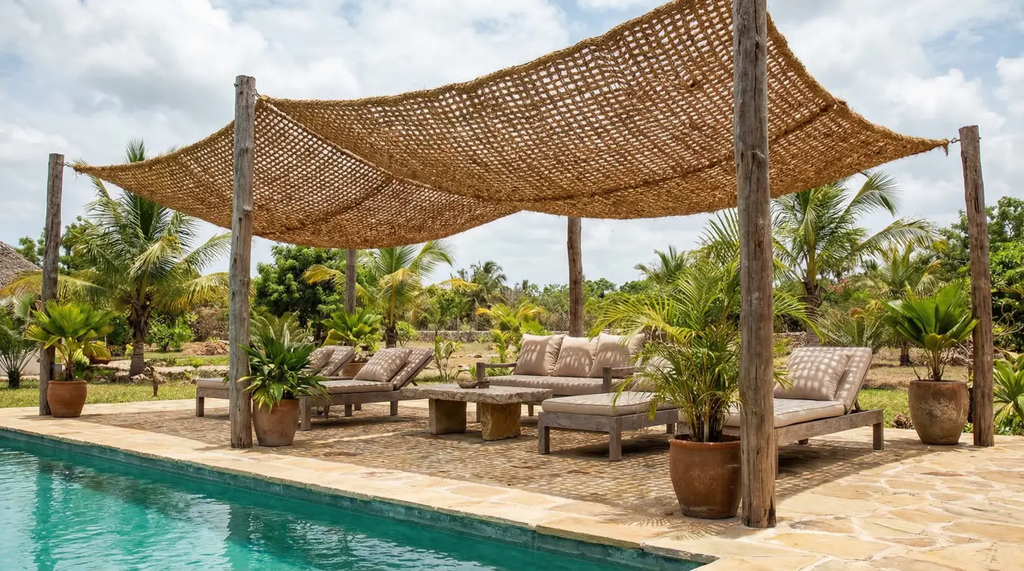
A coconut fibre shade sail is an outdoor shading concept that incorporates coconut-derived fibers into a shade structure. These fibers, commonly known as coir, can provide an organic appearance that complements tropical gardens, natural landscaping, and outdoor living spaces.
Shade sails are generally designed to cover selected areas without requiring a conventional solid roof. They can be installed over patios, garden seating, outdoor dining areas, walkways, and selected recreational spaces. Their shapes and configurations can be adapted to different architectural styles and site layouts.
Natural-fiber shading can be particularly appealing in tropical environments where wood, stone, bamboo, and greenery are commonly incorporated into outdoor design. Coconut fibers can contribute a distinctive texture that works well with these materials.
Nevertheless, buyers should distinguish between decorative coconut-fiber products and shade sails engineered for permanent outdoor use. A natural appearance does not guarantee reliable ultraviolet protection, resistance to rain, or structural performance in strong winds.
Before purchasing a shade sail, it is important to confirm the exact material composition, intended use, installation requirements, and expected service life.
Exploring Coconut Fibre Shade Sail Applications
A coconut fibre shade sail can be considered for outdoor environments where natural textures and tropical aesthetics are important design priorities. Residential gardens, resort terraces, villa courtyards, and outdoor hospitality spaces are examples of settings where natural-fiber elements may complement the surrounding architecture.
In residential properties, shade structures can help define outdoor living areas and make patios or seating spaces more comfortable during sunny periods. When positioned correctly, they can reduce direct sunlight reaching selected parts of the property.
Hotels and resorts may incorporate natural-looking shading into garden lounges, outdoor dining areas, and relaxation zones. The appearance of coconut fibers can complement landscaping and furniture made from other natural materials.
Restaurants and cafes with outdoor seating can also benefit from thoughtfully designed shade structures. Providing shade may improve the usability of outdoor tables during sunny weather, although the amount of protection depends on the product’s design and specifications.
Landscaping projects may use coconut-derived materials as part of broader natural design concepts. However, coir mesh used for erosion control should not be confused with a shade sail designed to cover people or outdoor furniture. These products serve different purposes and have different structural requirements.
Coconut Coir Upholstery Versus Coconut Fiber Shade Sails
Although both applications use coconut-derived fibers, upholstery materials and shade sails have different performance requirements.
Coir upholstery is generally designed to provide cushioning, firmness, or internal support within furniture. Manufacturers must consider resilience, density, comfort, and repeated compression. The material may also need to meet relevant requirements for hygiene, durability, and fire performance, depending on the finished product and market.
Shade sails, in contrast, are designed for outdoor exposure and must be evaluated for weather resistance, airflow, ultraviolet protection, and structural safety. Their supporting components and attachment points must also withstand the loads created by wind and tension.
The processing methods may therefore differ considerably. Upholstery fibers may be cleaned, graded, bonded, or combined with other materials to achieve a desired cushioning structure. Fibers intended for outdoor applications require suitable construction and must be assessed for moisture exposure and environmental deterioration.
These distinctions are important for buyers sourcing coconut-based materials. Selecting a product based only on the general term coconut fiber may lead to unsuitable results. Clear technical specifications help manufacturers and property owners identify the right material for each application.
Environmental Considerations of Coconut-Based Materials
Coconut fibers are derived from an agricultural resource that can be processed into multiple commercial products. Using coconut husks in manufacturing may help create additional value from materials that might otherwise be underutilized.
Coir-based products can support material diversification in furniture manufacturing, horticulture, landscaping, and other industries. Their natural origin may also appeal to businesses seeking alternatives to certain conventional materials.
However, natural materials are not automatically environmentally preferable in every situation. Their overall impact depends on farming practices, processing methods, transportation distances, binding agents, product durability, and disposal options.
For upholstery, the environmental characteristics of the finished product depend on all its components, including adhesives, latex, covers, and other materials. For shade sails, buyers should consider the complete structure, including the fabric or fiber, fittings, support posts, and expected replacement frequency.
Responsible sourcing and appropriate product selection are therefore important. Manufacturers and buyers should evaluate the entire product lifecycle rather than relying exclusively on claims about natural composition.
Choosing a Reliable Coconut Fiber Product Supplier
Selecting a reliable supplier is essential for businesses purchasing coconut coir upholstery materials or outdoor shade products. Buyers should begin by identifying the exact application and determining the technical requirements that the material must satisfy.
For upholstery applications, important factors may include fiber length, cleanliness, density, moisture content, binding method, and suitability for the intended cushioning system. Manufacturers should also request information about quality consistency and any applicable product testing.
For shade sails, buyers should verify the material composition, dimensions, construction, weather suitability, ultraviolet protection information, and installation specifications. The intended location matters because outdoor products may face different levels of sunlight, rainfall, humidity, and wind exposure.
Packaging, production capacity, and delivery arrangements are also important when sourcing products internationally. Businesses purchasing in bulk should confirm minimum order quantities, lead times, available specifications, and shipping options before placing an order.
Requesting samples and reviewing technical documentation can help buyers evaluate quality before committing to a large purchase. Clear communication about intended use and performance expectations can also reduce misunderstandings between suppliers and customers.
Maintaining Coconut-Based Products
Proper maintenance can help extend the useful life of products made with coconut fibers. The appropriate care routine depends on the material’s construction and intended application.
For coir upholstery, preventing prolonged exposure to moisture is important because damp conditions can affect natural fibers and encourage unwanted odors or deterioration. Furniture should be maintained according to the manufacturer’s instructions, and damaged or excessively compressed padding should be evaluated when necessary.
For outdoor shade structures, regular inspections can help identify wear, loose fittings, damaged fibers, or problems with supporting components. Products should be cleaned according to the manufacturer’s recommendations, and their condition should be checked after severe weather.
Shade sails must not be assumed to be suitable for all weather conditions. Buyers should follow the specified wind limits, removal instructions, and installation requirements provided by the manufacturer. Professional installation may be appropriate for larger structures or exposed locations.
A maintenance plan based on the product’s materials and environmental conditions helps support safe use and more predictable service life.
Where to Explore Coconut Coir Products
Businesses interested in coconut-based materials can review product information to better understand available options and their intended applications.
For general information about coconut coir, coco peat, and related natural fiber materials, visit Coco Peat Coco Fiber Australia.
For additional information about coconut sun shade sails and their outdoor applications, explore the Coconut Sun Shade Sails product page.
These resources can help buyers explore coconut-derived products and identify questions to ask suppliers about material composition, dimensions, installation, and suitability. Product specifications and current availability should be confirmed directly with the supplier before making purchasing decisions.
Conclusion
Coconut coir offers a range of possibilities for furniture manufacturing and outdoor design. In upholstery, it can provide a supportive natural-fiber component for selected cushioning systems. In outdoor environments, coconut-based shade concepts can introduce organic textures that complement tropical architecture and landscaping.
Despite their shared origin, these applications require different material properties and performance standards. Buyers should evaluate quality, construction, durability, maintenance, and intended use before selecting a product.
By working with reliable suppliers and reviewing detailed product specifications, businesses can make informed decisions about incorporating coconut-derived materials into furniture, landscaping, and outdoor projects.
Contact Information
Visi Arlion International PVT LTD
WhatsApp: +62-813-1006-910 (Ms. Mala)
Email: [email protected]
Tighten repetitive sections and paragraphsStrengthen the buyer-focused structure