

Unlocking the Potential of Coconut Byproducts
Coconut husk products have emerged as a remarkable testament to how nature’s byproducts can be transformed into valuable, multifunctional resources. Once considered agricultural waste, coconut husks are now at the forefront of eco-friendly innovation. Their fibrous composition, durability, and natural resilience make them ideal for a wide array of applications, from horticulture to industrial manufacturing.
The outer shell of the coconut, often discarded after harvesting the edible portions, holds immense untapped potential. Through careful processing, this husk is converted into materials that are not only practical but also environmentally responsible. In an era where sustainability is no longer optional, coconut husk products provide a compelling alternative to synthetic and non-renewable materials.
Understanding Coconut Husk vs Coir
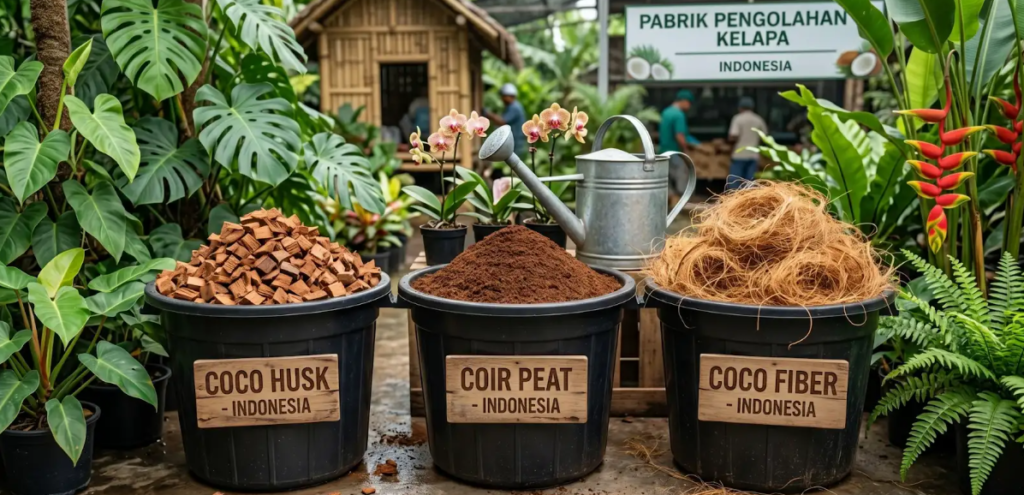
A common point of curiosity revolves around coconut husk vs coir, a distinction that often causes confusion among newcomers. The coconut husk refers to the entire fibrous outer layer, while coir is the processed fiber extracted from it. This transformation involves separating the long fibers from the pith, resulting in materials with distinct characteristics and uses.
Coir fibers are known for their strength and elasticity. They are widely used in rope making, mats, and brushes due to their robust nature. Meanwhile, the remaining pith, often referred to as cocopeat, is highly absorbent and serves as an excellent growing medium for plants. Understanding this differentiation allows for more precise utilization of each component, maximizing the value derived from a single natural resource.
Short explanation. Big impact. The distinction shapes how industries and gardeners alike approach material selection.
Coconut Coir vs Coconut Fiber: Subtle Yet Significant
Another nuanced comparison lies in coconut coir vs coconut fiber. While these terms are sometimes used interchangeably, they carry subtle differences depending on context. Coconut fiber typically refers to the raw, unprocessed strands obtained directly from the husk. Coir, on the other hand, often implies a more refined or processed form, tailored for specific applications.
This distinction becomes particularly relevant in horticulture. Raw coconut fiber offers excellent aeration but may lack uniformity. Processed coir products, such as compressed blocks or mats, provide consistency and ease of use. Gardeners and growers often prefer coir for its predictable performance, especially in controlled environments like greenhouses or hydroponic systems.
Precision matters. Especially when plant health is at stake.
Applications in Modern Horticulture
Coconut husk products have revolutionized modern gardening practices. Their ability to retain moisture while maintaining proper aeration makes them an exceptional alternative to traditional soil. In seed germination, cocopeat derived from the husk provides a sterile and nutrient-balanced medium that encourages rapid sprouting.
In container gardening, these materials prevent soil compaction and improve root development. Plants grown in coir-based mediums often exhibit healthier growth patterns, thanks to the optimal balance of water and oxygen. Additionally, coconut husk chips are widely used as mulch, helping to regulate soil temperature and reduce evaporation.
The adaptability of these products extends to hydroponics, where precision and control are paramount. Coir substrates allow growers to fine-tune nutrient delivery, resulting in higher yields and more consistent crop quality.
Industrial and Commercial Uses
Beyond gardening, coconut husk products have found their place in various industries. Coir fibers are used in the production of geotextiles, which help prevent soil erosion and stabilize landscapes. These biodegradable materials offer an eco-friendly alternative to synthetic solutions, aligning with global sustainability goals.
In manufacturing, coconut fibers are incorporated into upholstery, mattresses, and even automotive components. Their natural resilience and resistance to moisture make them an attractive choice for products that require durability and longevity.
Even the smallest fragments of the husk are utilized. Nothing goes to waste. This efficiency underscores the versatility of coconut-based materials and their role in promoting a circular economy.
Environmental Benefits and Sustainability
One of the most compelling aspects of coconut husk products is their environmental impact. Unlike peat moss, which is harvested from delicate ecosystems, coconut husk materials are derived from renewable agricultural waste. This reduces the strain on natural habitats while providing a sustainable alternative for various applications.
Furthermore, these products are biodegradable and can be reused multiple times with proper care. Their long lifespan and minimal environmental footprint make them a preferred choice for eco-conscious consumers and businesses alike.
The shift toward sustainable materials is not just a trend. It is a necessity. Coconut husk products embody this transition, offering practical solutions that do not compromise the planet’s well-being.
Conclusion
Coconut husk products represent a harmonious blend of innovation, sustainability, and practicality. From horticulture to industrial applications, their versatility continues to redefine how natural resources are utilized. By understanding the distinctions between coconut husk vs coir and coconut coir vs coconut fiber, users can make informed decisions that maximize both efficiency and environmental responsibility.
As industries evolve and sustainability becomes a central focus, coconut husk products stand out as a reliable and forward-thinking solution. They are not merely byproducts. They are the future of eco-friendly material innovation.
WhatsApp : (+62)812 1233 3590 (Ms.Maria)
Email : [email protected]