

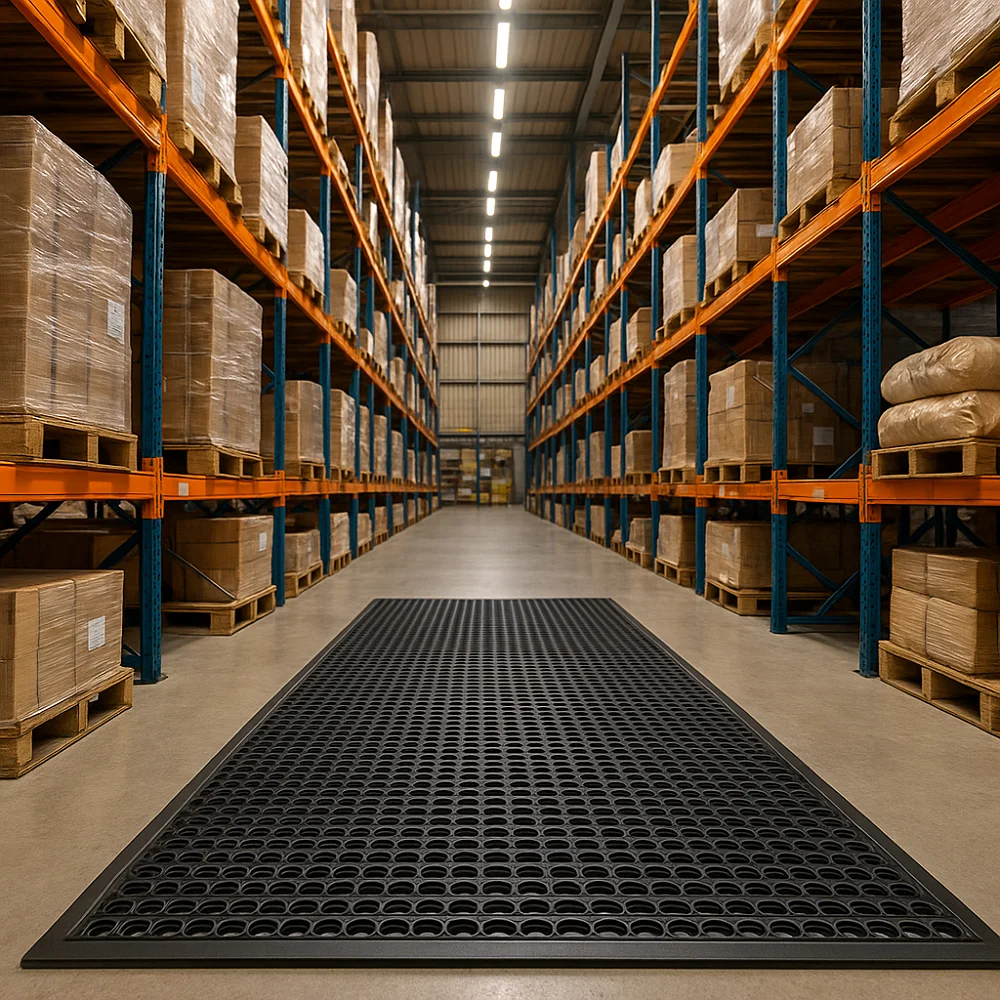
Industrial and commercial environments often require flooring and surface solutions that can withstand demanding conditions. Areas exposed to water, mud, heavy foot traffic, and constant movement need materials that provide both practical protection and reliable performance. Rubber-based products have become increasingly useful in these settings because of their durability, flexibility, and resistance to everyday wear.
Two solutions worth considering are industrial drainage mats and interlocking rubber tile systems. Although they can serve different purposes, both can contribute to cleaner, safer, and more functional working environments.
Why Drainage Matters in Industrial Areas
Water accumulation can create several problems in industrial facilities. Wet surfaces may become slippery, while standing water can make cleaning and maintenance more difficult. In areas such as workshops, production facilities, entrances, kitchens, livestock facilities, and outdoor workspaces, effective drainage can therefore be an important part of surface management.
Industrial drainage mats are designed with openings or patterned surfaces that allow liquids and debris to move away from the primary walking surface. This can help keep the top surface relatively cleaner and drier while providing a more comfortable area for workers.
The design of a drainage mat can also help improve traction. A textured rubber surface provides additional grip compared with a smooth floor, which can be particularly useful in locations where water or other liquids are frequently present.
Applications of Industrial Drainage Mats
Drainage mats can be used across a variety of commercial and industrial environments. Workshops and garages may use them in areas where water, oil, or other materials can accumulate. Commercial kitchens can also benefit from surfaces designed to handle wet conditions.
Outdoor applications are another possibility. Entranceways, walkways, loading areas, and other exposed locations can require surfaces that cope with rain and moisture while remaining practical for daily use.
Livestock and agricultural facilities may also use drainage mats where moisture and organic material are common. The appropriate mat design will depend on the specific environment, cleaning requirements, and expected traffic.
Understanding Interlocking Rubber Tile Systems
An interlocking rubber tile provides another approach to creating durable flooring. Instead of being permanently bonded to the underlying surface, individual tiles can be designed to connect with one another through interlocking edges.
This design can make installation more convenient because tiles can be assembled to cover a specific area without necessarily requiring complicated installation procedures. Individual sections can also potentially be removed or replaced if damaged.
Interlocking systems are useful when flexibility is important. Businesses may need to modify, expand, or maintain a flooring area over time, and modular tiles can make these changes easier to manage.
Benefits of Rubber Flooring
Rubber has several characteristics that make it suitable for demanding environments. It is flexible, resilient, and capable of handling repeated foot traffic. A properly selected rubber flooring product can also help reduce the impact of daily use on the underlying floor.
Another advantage is comfort. Employees who spend long periods standing may benefit from a surface with some cushioning compared with a hard concrete floor. Rubber flooring can provide a more forgiving surface while maintaining durability.
Noise reduction can also be a consideration. Rubber materials can help absorb some impact and sound generated by footsteps, equipment, or dropped objects, depending on the product and installation environment.
Choosing the Right Surface for Your Facility
The correct flooring solution depends on how and where the surface will be used. Before purchasing a rubber mat or tile system, businesses should consider factors such as moisture exposure, traffic levels, cleaning methods, surface dimensions, and expected mechanical loads.
For wet environments, drainage characteristics should be a priority. A product that allows water and debris to pass through can be more practical than a completely solid surface.
For modular flooring requirements, interlocking tiles can offer flexibility. Their individual design makes it possible to create customized floor layouts while simplifying maintenance in certain applications.
Product thickness, texture, dimensions, and rubber composition should also be evaluated. Different environments require different performance characteristics, so selecting a product based solely on appearance or price may not provide the best long-term result.
Supporting Cleaner and Safer Workspaces
Flooring is often overlooked when businesses consider workplace safety and maintenance. However, the condition and design of a floor can influence how easily an area can be cleaned and how safely people can move through it.
Drainage mats can help manage moisture in wet areas, while rubber tiles can provide a resilient and comfortable walking surface. Together, these solutions demonstrate how relatively simple flooring improvements can contribute to more practical workspaces.
Businesses should also establish appropriate cleaning and maintenance procedures according to the manufacturer’s recommendations. Regular inspection can help identify damaged sections and ensure that the flooring continues to perform as intended.
A Practical Investment for Industrial Environments
For facilities exposed to demanding working conditions, choosing suitable flooring materials can provide long-term practical benefits. Rubber products offer a combination of durability, flexibility, and functionality that makes them suitable for many commercial and industrial applications.
Industrial drainage mats are particularly useful where water and debris need to be managed, while an interlocking rubber tile system can provide a flexible modular flooring option. The best choice ultimately depends on the environment and the specific requirements of the facility.
By evaluating drainage, traction, durability, maintenance, and installation requirements before purchasing, businesses can select a rubber flooring solution that supports a safer, cleaner, and more efficient workspace.
For more information about our rubber mat products, please contact our team:
Visi Arlion International PVT LTD
WhatsApp: +62-813-1006-910 (Ms. Mala)
Email: [email protected]
